Introduction
Executing car seat cigarette burn repair, such as addressing ugly, charred craters in cloth or leather seats caused by stray embers by utilizing DIY repair kits and razor shaving techniques ranging from $15 to $40, professional mobile upholstery patching spanning $75 to $200, or full seat re-trimming costing $300 to $800+ across the United States, combines targeted cabin restoration with smart household budgeting.
Navigating auto interior maintenance choices, such as balancing professional upholstery shop color-matching protocols and flexible leather fillers against expensive full seat replacements, ensures you protect your personal finances from unbudgeted repair bills while eliminating unsightly smoke damage. Whether you are reviewing charred fiber trimming and adhesive backing steps, analyzing material versus professional labor fee breakdowns, or following structured itemized restoration roadmaps, understanding expert automotive interior technician workflows allows you to execute an informed operational strategy that keeps your vehicle’s cabin looking immaculate on U.S. roadways while preserving its overall market resale value.
Symptoms and Warning Signs of Seat Burns
Upholstery burns present differently depending on the seating material:
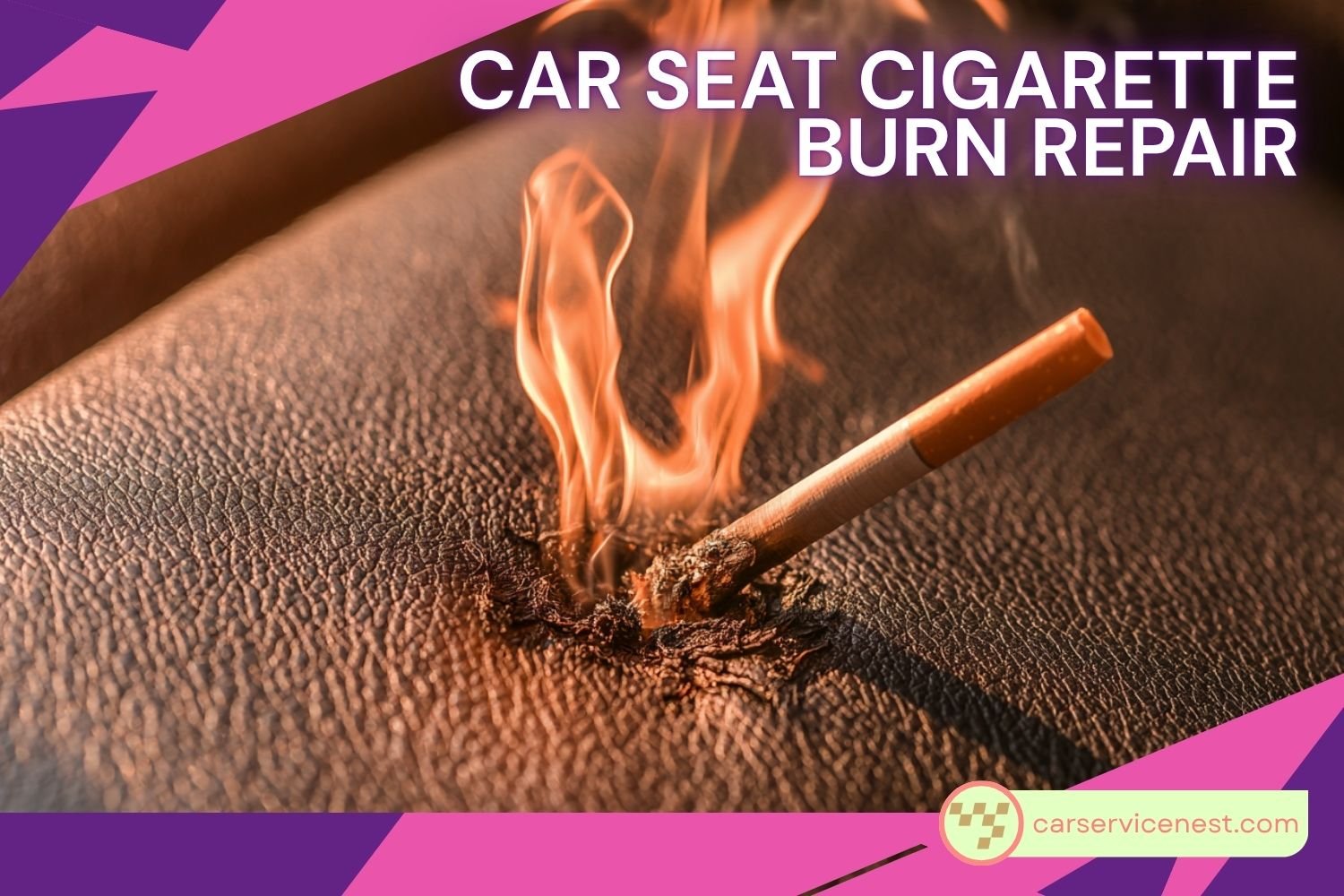
Fabric Seat Burns: Hard, melted synthetic fibers surrounded by a dark, frayed crater in cloth, velour, or tweed seats.
Leather & Vinyl Seat Burns: Melted vinyl edges or hardened, cracked leather with a charred center surrounded by a puckered ring.
Foam Padding Charring: Lingering smoky odor embedded deep inside foam cushion padding beneath the surface burn.
Unraveling Edges: Expanding holes where surrounding threads begin unraveling from tension.
Financial Planning: How Much Does Car Maintenance Cost?
For U.S. vehicle owners managing household expenses, understanding how much car maintenance costs is essential to prevent unexpected financial burdens. On average, routine maintenance and minor repairs cost U.S. vehicle owners between $400 and $800 annually (or up to $1,200 depending on vehicle age, mileage, and make). While modern engineering has extended service intervals, ignoring foundational items like oil changes, brake inspections, and tire rotations can transform minor preventative upkeep into multi-thousand-dollar emergency repairs. Understanding these typical costs allows drivers to plan and protect their long-term automotive investment.
Vehicle upkeep expenses depend on how frequently you drive and the lifecycle stage of your car. Newer automobiles require mostly basic fluid changes, whereas aging cars demand heavy component replacements.
1. Routine Upkeep and Fluid Changes ($350 – $600 Annually): Routine maintenance covers scheduled items like synthetic oil changes, filter replacements, and tire rotations performed every 5,000 to 7,500 miles.
2. Wear-and-Tear Replacements ($300 – $550 Annually): Consumable parts wear down over time. Budgeting for brake pad replacements, wiper blade swaps, and periodic tire balancing covers these inevitable wear items.
3. Milestone and Minor Repairs ($250 – $500 Annually): As odometers climb past 60,000 miles, setting aside funds for spark plug replacements, coolant flushes, and minor electrical checks ensures financial stability.
Safety Assessment and Risk Levels
When evaluating your vehicle’s interior seat burn and preparing for restoration, classify your situation using this practical scale:
Monitor: Purely cosmetic cigarette burns on seat cushions, backrests, or headrests with no mechanical or structural risk; you can drive safely.
Service Soon: Burns accompanied by torn side bolster airbags or compromised seat heating element wiring.
Urgent Repair: Deep burns reaching internal SRS seat airbag sensors or wiring harnesses.
Stop Immediately / Structural & Aesthetic Degradation Hazard: A small burn hole in cloth seats will quickly widen into a large tear under normal passenger weight and friction; treat interior burns promptly to avoid structural upholstery failure.
Adhering to strict safety standards and addressing upholstery burns early prevents expanding fabric tears and safety sensor compromises on every U.S. roadway.
Required DIY Tools & Estimated U.S. Prices
For minor cigarette burns on fabric or leather seats, DIY repair kits provide economical restoration. Below is a U.S. average cost breakdown.
| Tool / Material | Purpose | Estimated U.S. Price |
| Fabric Seat Repair Kit (Fuzz & Adhesive) | Provides backing patch, textile adhesive, and color-matched fuzz fibers | $15 – $30 |
| Leather & Vinyl Repair Kit (Filler & Color) | Includes grain transfer paper, color compounds, and heat cure tool | $20 – $40 |
| Razor Blade / Hobby Knife | Trims away charred, melted edges cleanly | $5 – $10 |
| Hidden Donor Fabric (Under Seat) | Provides exact color-matched fuzz fibers for cloth patching | Free (Salvaged) |
| Isopropyl Alcohol Prep Pad | Cleans burnt residue and oils before patching | $5 – $10 |
Service Duration Planning: How Long Does It Take for Car Maintenance?
For U.S. vehicle owners balancing busy daily commitments, knowing how long car maintenance takes is critical for planning transportation and work schedules. Whether you are dropping off your vehicle for a quick oil change or a comprehensive mileage milestone inspection, service turnaround times vary widely based on the specific mechanical task, shop workflow, and part availability. Standard minor services like an oil and filter change typically take 30 to 45 minutes, whereas comprehensive major services or complex mechanical repairs can require anywhere from 2 to 4 hours or even a full working day. Understanding these timeframes helps drivers manage expectations, coordinate rides, and ensure their vehicles receive proper professional attention.
Not all vehicle maintenance tasks are created equal. While some minor services are engineered for maximum speed in dedicated express lanes, comprehensive checkups require meticulous testing, teardown, and precision labor.
1. Routine Minor Services (30 to 60 Minutes): Proactive minor services, such as conventional or synthetic oil changes, windshield wiper blade replacements, cabin air filter swaps, and quick tire pressure checks, are designed for rapid turnaround.
2. Intermediate and Milestone Services (1 to 3 Hours): Services occurring at regular mileage increments (such as tire rotations, brake fluid flushes, wheel alignments, and spark plug replacements) involve multiple vehicle systems and require specialized equipment, extending the timeframe to between 1 and 3 hours.
3. Major Overhauls and Complex Repairs (3 to 6+ Hours): Major services, including timing belt replacements, transmission fluid flushes, suspension strut swaps, or complex electrical diagnostics, demand extensive labor and cooling or lifting time, frequently requiring the vehicle to remain at the shop for half a day or longer.
Car Maintenance Duration Matrix
Reference this structured matrix to review service categories, average time requirements, and included maintenance tasks.
| Service Category | Average Duration | Primary Tasks Included |
| Oil Change & Filter Swap | 30 – 45 Minutes | Draining oil, replacing oil filter, refilling fluid, visual safety check. |
| Oil Change & Tire Rotation | 45 – 60 Minutes | Oil service plus rotating tires, checking tread depth, and adjusting tire pressure. |
| Brake Pad Replacement (Per Axle) | 1.5 – 2.5 Hours | Installing new brake pads, inspecting or machining rotors, and bleeding brake lines. |
| DIY Fabric/Leather Repair Kit Application | 45 to 90 Minutes | Trimming charred edges, inserting backing patch, filling, and texturing. |
| Mobile Interior Specialist Restoration | 1 to 2 Hours | On-site professional grain matching and color compounding. |
| Professional Upholstery Panel Replacement | 1 to 2 Days | Traditional upholstery shop replacing entire seat cover panels. |
| Adhesive & Compound Full Curing Time | 24 Hours | Allowing patch and filler compounds to cure completely before pressure. |
Cost Comparison: Professional vs. DIY Matrix
U.S. repair pricing varies based on whether you use a DIY kit, hire a mobile interior specialist, or visit a professional upholstery shop.
| Repair Method | Estimated U.S. Cost | Typical Labor Time |
| DIY Repair Kit (Cloth or Leather) | $15 – $40 | 45 – 90 minutes |
| Mobile Interior Restoration Specialist | $120 – $250 | 1 – 2 hours |
| Professional Upholstery Shop (Panel Replacement) | $350 – $800+ | 1 – 2 days |
Master Service Schedule for General Maintenance on a Car
Following a time- and mileage-based schedule ensures that no critical maintenance item is overlooked:
Minor Routine Service (Every 5,000 to 7,500 Miles / 6 Months): Synthetic engine oil and filter replacement; tire rotation and cold inflation pressure check; topping off washer fluid; visual check of brakes, belts, and lights.
Intermediate Maintenance (Every 15,000 to 30,000 Miles / 12 to 24 Months): Engine air filter and cabin HVAC filter renewals; hydraulic brake fluid moisture test and flush; battery conductance load test; wiper blade replacements.
Major Mileage Overhaul (Every 60,000 to 100,000 Miles / 5 to 8 Years): Automatic transmission fluid exchange; radiator coolant flush; iridium spark plug replacement; serpentine drive belt and tensioner renewal; differential gear oil replacement.
General Maintenance Inspection & Service Matrix
Review the master service matrix detailing component inspection tasks, frequencies, and action triggers.
| Service Category | Average Duration | Primary Tasks Included |
| Monthly Cabin Upholstery Inspection | Inspects interior seats monthly for early signs of wear or accidental burns | Monthly |
| Leather Conditioning & Balm Treatment | Conditions leather seats to maintain suppleness and heat resistance | Every 3 to 6 months |
| Interior Vacuuming & Ash Debris Removal | Vacuums upholstery regularly to remove ash, grit, and debris | Bi-weekly |
| Engine Oil & Filter | Full synthetic motor oil & OEM filter exchange | 5,000 – 7,500 Miles / 6 Mo |
Frequently Asked Questions
- Can cigarette burns on car seats be repaired completely?
Yes! For cloth seats, fiber-patching kits can hide burns by 80-95%. For leather seats, specialized fillers and color matching can make burns virtually invisible. - How much does professional car seat cigarette burn repair cost in the U.S.?
Mobile interior specialists typically charge $120 to $250 to fix a seat burn on-site, while traditional upholstery shops charge $350+ if an entire seat panel must be replaced. - Where do I get matching fabric fuzz for cloth seat repairs?
You can carefully snip hidden threads or fuzz from underneath the car seat, inside storage pockets, or behind the seat skirt where it won’t affect appearance. - Will car insurance cover cigarette burn repairs?
Comprehensive insurance covers cabin damage from vandalism or accidental fires, but repair costs typically fall below standard deductibles ($500–$1,000). - Can leather repair compound be used on cloth seats?
No. Leather repair compounds dry into rigid plasticized fillers that ruin the soft texture of cloth and velvet seats. - How long does DIY seat repair take to dry?
Most fabric and leather repair adhesives require 24 hours to fully cure and achieve maximum bond strength. - Does a cigarette burn lower car resale value?
Yes, interior burns signal poor vehicle maintenance and can reduce trade-in or private party resale values by $200 to $500. - Are mobile interior repair technicians reliable?
Yes! Mobile interior specialists use professional grain-matching equipment and color-mixing systems to deliver flawless results at your home or office.
Final Takeaway
Mastering a car seat cigarette burn repair at home ultimately comes down to patience, precision, and using the right matching fibers or filler rather than rushing the heating or curing process. Whether you are patching a cloth interior with a DIY kit and backing fabric or filling a vinyl puncture with color-matched compound, taking the extra time to properly prep and blend the surrounding texture will save you from an expensive professional upholstery replacement. By following a methodical, step-by-step approach to car seat cigarette burn repair, you can restore your vehicle’s interior aesthetics seamlessly and protect your car’s resale value with minimal effort.