
Introduction
Mastering paintless dent repair tools car enthusiasts and technicians rely on, such as evaluating professional sheet metal restoration kit pricing ranging from $30 to $120 for DIY glue-pulling bridge sets and slide hammers to $300 to $1,500+ for comprehensive stainless steel PDR rod and LED line board station overhauls across the United States, combines targeted exterior cosmetic maintenance with smart household budgeting.
Navigating automotive dent restoration equipment choices, such as balancing proper tap-down knockdown pen techniques and factory paint preservation protocols against unbudgeted body shop repainting risks, ensures you protect your personal finances from unnecessary out-of-pocket expenses while eliminating unsightly parking lot dings and door creases. Whether you are reviewing glue tab adhesion, stainless steel rod leverage manipulation, and LED reflection alignment steps, analyzing DIY kit versus professional technician equipment fee breakdowns, or following structured itemized restoration roadmaps, understanding expert automotive bodywork workflows allows you to execute an informed operational strategy that keeps your vehicle pristine on U.S. roadways while preserving its overall market resale value.
Essential Paintless Dent Repair Tools Every Technician Needs
Paintless dent removal is an exact science that requires specialized instruments designed to address both the backside and exterior surface of damaged body panels
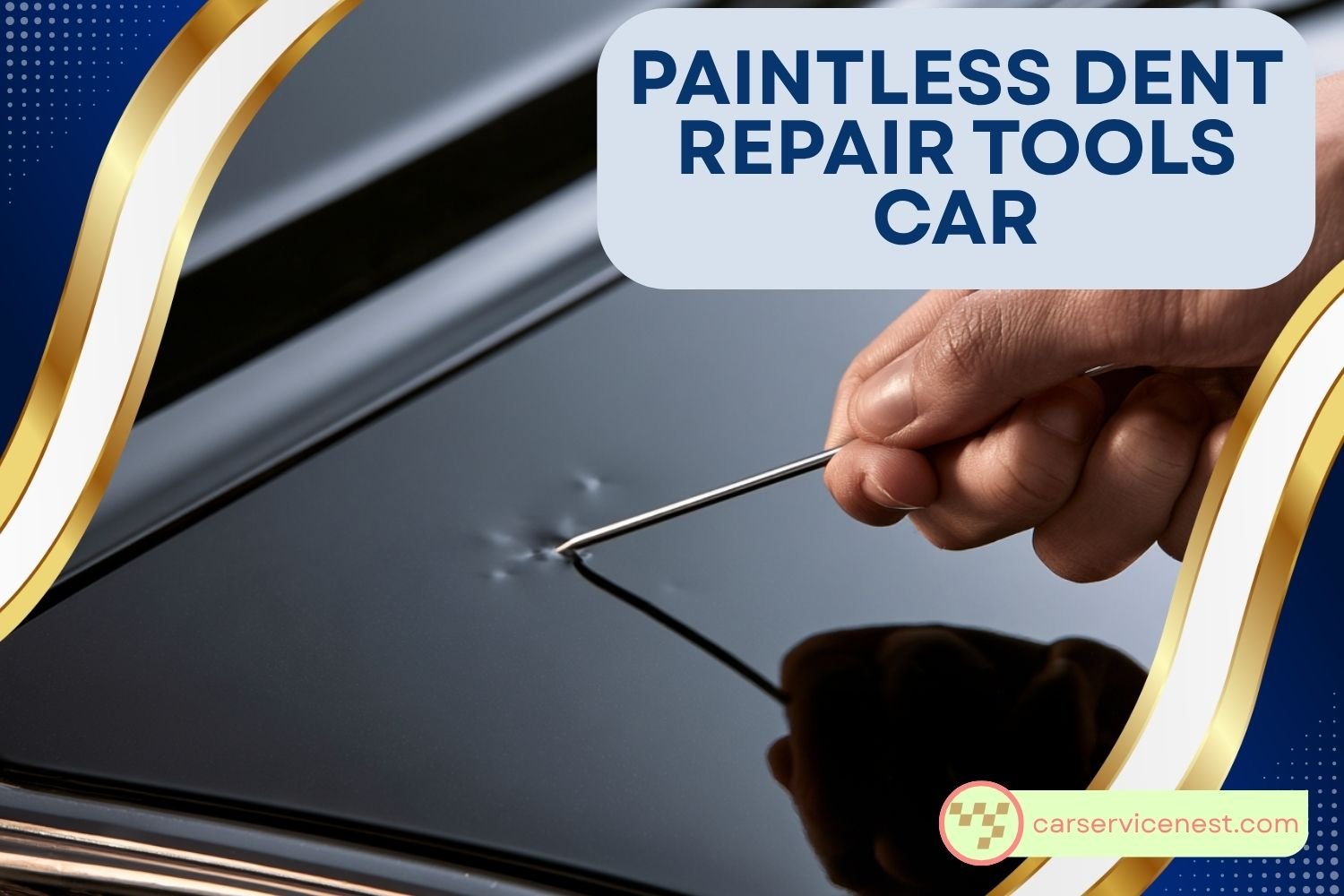
1. Stainless Steel PDR Rods and Picks: Long, specialized steel rods of varying lengths, thicknesses, and tip shapes designed to reach behind panels (doors, hoods, fenders) to push dents out directly (Provides direct mechanical leverage against the deepest point of the dent).
2. Glue Pulling Systems and Tabs: Used when the backside of a panel is inaccessible, utilizing high-adhesion glue, specialized plastic tabs, and bridge lifters to pull metal outward from the exterior (Lifts surface dents without drilling or harming the clear coat).
3. LED Line Boards and Reflection Lamps: Specialized portable lights featuring parallel striped lines that reflect off the vehicle’s glossy body panel, highlighting minor surface distortions (Guides the technician’s micro-adjustments with optical precision).
4. Tap-Down Pens and Knockdowns: Plastic, Teflon, or aluminum striking tools used alongside a small hammer to flatten any high spots created during the dent-pushing or pulling process (Ensures the repaired metal contour returns completely flush).
Financial Planning: How Much Does Car Maintenance Cost?
For U.S. vehicle owners managing household expenses, understanding how much a car maintenance cost is essential to prevent unexpected financial burdens. On average, routine maintenance and minor repairs cost U.S. vehicle owners between $400 and $800 annually (or up to $1,200 depending on vehicle age, mileage, and make). While modern engineering has extended service intervals, ignoring foundational items like oil changes, brake inspections, and tire rotations can transform minor preventative upkeep into multi-thousand-dollar emergency repairs. Understanding these typical costs allows drivers to plan ahead and protect their long-term automotive investment.
Vehicle upkeep expenses depend on how frequently you drive and the lifecycle stage of your car. Newer automobiles require mostly basic fluid changes, whereas aging cars demand heavy component replacements.
1. Routine Upkeep and Fluid Changes ($350 – $600 Annually): Routine maintenance covers scheduled items like synthetic oil changes, filter replacements, and tire rotations performed every 5,000 to 7,500 miles.
2. Wear-and-Tear Replacements ($300 – $550 Annually): Consumable parts wear down over time. Budgeting for brake pad replacements, wiper blade swaps, and periodic tire balancing covers these inevitable wear items.
3. Milestone and Minor Repairs ($250 – $500 Annually): As odometers climb past 60,000 miles, setting aside funds for spark plug replacements, coolant flushes, and minor electrical checks ensures financial stability.
Safety Assessment and Urgency Levels
Evaluate whether your vehicle’s dent damage requires immediate attention or routine monitoring
Monitor: Minor parking lot dings or shallow door dents that do not compromise factory paint or panel structure.
Service Soon: Moderate door creases or hail impacts that can be easily massaged out using PDR tools before rust or paint cracking occurs.
Service Immediately / Tow Immediately: Severe panel buckling or sharp creases crossing structural reinforcement beams, requiring professional body shop intervention.
Stop Immediately / Structural Collision Hazard: Never attempt PDR methods on tears or sharp metal creases near active side-impact airbag deployment zones, as compromised sheet metal can interfere with safety compliance.
Adhering to strict safety standards and addressing structural panel damage immediately prevents safety compliance failures and extensive body degradation across every U.S. community.
Paintless Dent Repair Tools Cost and Equipment Comparison Table
Review the estimated U.S. cost ranges and kit compositions for popular PDR tool packages ranging from DIY sets to professional technician stations.
| PDR Tool Package Type | Estimated U.S. Cost DOCX | Equipment Included DOCX |
| Basic DIY Glue Puller Set | $25 – $60 | Bridge puller, tabs, glue gun, knockdown pen |
| Intermediate PDR Rod & Tab Kit | $80 – $200 | Assorted stainless steel rods, glue kit, tap-downs |
| Advanced Professional PDR Tool Set | $300 – $800 | Extensive rod collection, multiple pullers, slide hammer |
| Master Shop Station with LED Board | $1,000 – $3,000+ | Full rod set, mobile cart, LED reflection lamp, professional accessories |
Service Duration Planning: How Long Does It Take for Car Maintenance?
For U.S. vehicle owners balancing busy daily commitments, knowing how long car maintenance takes is critical for planning transportation and work schedules. Whether you are dropping off your vehicle for a quick oil change or a comprehensive mileage milestone inspection, service turnaround times vary widely based on the specific mechanical task, shop workflow, and part availability. Standard minor services like an oil and filter change typically take 30 to 45 minutes, whereas comprehensive major services or complex mechanical repairs can require anywhere from 2 to 4 hours or even a full working day. Understanding these timeframes helps drivers manage expectations, coordinate rides, and ensure their vehicles receive proper professional attention.
Not all vehicle maintenance tasks are created equal. While some minor services are engineered for maximum speed in dedicated express lanes, comprehensive checkups require meticulous testing, teardown, and precision labor.
1. Routine Minor Services (30 to 60 Minutes): Proactive minor services, such as conventional or synthetic oil changes, windshield wiper blade replacements, cabin air filter swaps, and quick tire pressure checks, are designed for rapid turnaround.
2. Intermediate and Milestone Services (1 to 3 Hours): Services occurring at regular mileage increments (such as tire rotations, brake fluid flushes, wheel alignments, and spark plug replacements) involve multiple vehicle systems and require specialized equipment, extending the timeframe to between 1 and 3 hours.
3. Major Overhauls and PDR Dent Removal (1 Hour to 2 Days): Major services, including DIY glue pulling or professional stainless steel rod massagings, demand specialized optical inspection and metal leveling, requiring anywhere from 1 to 2 hours for isolated dings up to 2 days for major hail restoration.
Car Maintenance Duration Matrix
Reference this structured matrix to review service categories, average time requirements, and included maintenance tasks.
| Service Category | Average Duration | Primary Tasks Included |
| Oil Change & Filter Swap | 30 – 45 Minutes | Draining oil, replacing oil filter, refilling fluid, visual safety check. |
| Oil Change & Tire Rotation | 45 – 60 Minutes | Proactive tire rotation, tread depth checks, and pressure adjustments. |
| Brake Pad Replacement (Per Axle) | 1.5 – 2.5 Hours | Installing new brake pads, inspecting rotors, and bleeding lines. |
| DIY Glue Pulling Session | 1 to 2 Hours | Cleaning panel, gluing pull tabs, pulling dents, and flattening high spots. |
| Intermediate PDR Rod Massage | 2 to 4 Hours | Accessing panel backside with stainless steel rods and LED line boards. |
| Professional Hail Storm Restoration | 1 to 3 Days | Massaging out hundreds of dents across multiple body panels. |
Cost Comparison: PDR Equipment Service Tiers Matrix
Comparing average U.S. equipment and repair costs highlights pricing expectations across DIY kits, intermediate tool sets, and master shop stations.
| PDR Equipment Tier | Average Equipment Cost | Expected Repair Result |
| Basic DIY Glue Puller Set | $25 – $60 | Good for 1 or 2 shallow dings |
| Intermediate Rod & Tab Kit | $80 – $200 | Effective for standard door dings |
| Advanced Professional PDR Set | $300 – $800 | Comprehensive body panel restoration |
| Master Shop Station | $1,000 – $3,000+ | Factory-grade collision and hail repair |
Master Service Schedule for General Maintenance on a Car
Following a time and mileage-based schedule ensures that no critical maintenance item is overlooked
Minor Routine Service (Every 5,000 to 7,500 Miles / 6 Months): Synthetic engine oil and filter replacement; tire rotation and cold inflation pressure check; topping off washer fluid; visual check of brakes, belts, and lights.
Intermediate Maintenance (Every 15,000 to 30,000 Miles / 12 to 24 Months): Engine air filter and cabin HVAC filter renewals; hydraulic brake fluid moisture test and flush; battery conductance load test; wiper blade replacements.
Major Mileage Overhaul (Every 60,000 to 100,000 Miles / 5 to 8 Years): Automatic transmission fluid exchange; radiator coolant flush; iridium spark plug replacement; serpentine drive belt and tensioner renewal; differential gear oil replacement.
General Maintenance Inspection & Service Matrix
Review the master service matrix detailing component inspection tasks, frequencies, and action triggers.
| Service Category | Average Duration | Personal Maintenance Tasks Included |
| Body Panel & Dent Inspection | 10 Minutes | Inspecting vehicle doors and side panels monthly under direct light for parking dings. |
| PDR Tool Maintenance & Cleaning | 15 Minutes | Cleaning pulling tabs and inspecting stainless steel rod tips for smooth contact. |
| Engine Oil & Filter | Full synthetic motor oil & OEM filter exchange | 5,000 – 7,500 Miles / 6 Mo |
Frequently Asked Questions
- What are the most important tools for a beginner doing PDR at home?
A bridge puller, assorted pulling tabs, high-adhesion pulling glue, and a tap-down knockdown pen form the core toolkit needed for beginner glue-pulling repairs. - Do professional PDR tools damage a car’s factory paint?
No. When used correctly, stainless steel rods push smoothly from behind, and PDR pulling glue releases cleanly with isopropyl alcohol without cracking or scratching the factory paint finish. - Why are LED line boards critical during paintless dent repair?
LED reflection boards project straight lines onto the car panel; any distortion in those lines reveals micro-dents or high spots that the naked eye might miss. - Can I use regular household glue for pulling car dents?
No. Standard hot glue lacks the tensile strength required to pull automotive sheet metal and will frequently snap off; specialized high-strength PDR pulling glue must be used. - What is the purpose of a tap-down knockdown pen?
Tap-down pens are used alongside a small mallet to flatten any high spots created during the dent-pushing or pulling process, ensuring the metal contour returns completely flush. - Can PDR tools fix deep creases where the paint is cracked?
No. While PDR tools can reshape the underlying sheet metal, if the factory paint is cracked or chipped down to bare metal, traditional body shop filling and repainting is required. - How do PDR stainless steel rods work behind door panels?
Technicians access the backside of panels through interior window slots or access plugs, using leverage against factory bracing to massage dents outward. - Is professional PDR training required to use advanced tool sets?
Yes, mastering advanced stainless steel rod placement and optical line board reading requires professional training and extensive hands-on practice.
Final Takeaway
Equipping yourself with the right paintless dent repair tools car owners and technicians rely on is essential for successfully erasing door dings and hail damage while protecting your original factory finish. To get started on your dent restoration today, you should immediately inspect your vehicle panels under direct lighting, determine whether your dings require glue pulling or backside rod pushing, and evaluate whether a basic DIY puller set or professional PDR tool package fits your needs. While minor parking lot dings can safely wait for your next convenient weekend garage project, you must address sharp creases or storm damage right away before structural panel distortion or rust sets in across U.S. roadways.