Introduction
Mastering how to repair weather stripping on car door, such as evaluating cabin insulation restoration pricing ranging from $10 to $30 for a tube of 3M weatherstrip adhesive and silicone spray to $150 to $350+ for professional body shop door seal replacements across the United States, combines targeted exterior body maintenance with smart household budgeting.
Navigating automotive weather stripping restoration choices, such as balancing proper pinch weld cleaning methods and 24-hour clamping protocols against unbudgeted cabin water leak risks, ensures you protect your personal finances from unnecessary body shop overcharges while eliminating annoying wind noise and damp carpets. Whether you are reviewing old seal removal, isopropyl alcohol surface prep, and adhesive application steps, analyzing DIY kit versus professional auto body shop fee breakdowns, or following structured itemized restoration roadmaps, understanding expert automotive technician workflows allows you to execute an informed operational strategy that keeps your vehicle sealed and quiet on U.S. roadways while preserving its overall market resale value.
Assessing Weather Stripping Damage Severity
Before buying materials, inspect the rubber door seals closely around all entryways to determine the appropriate fix:
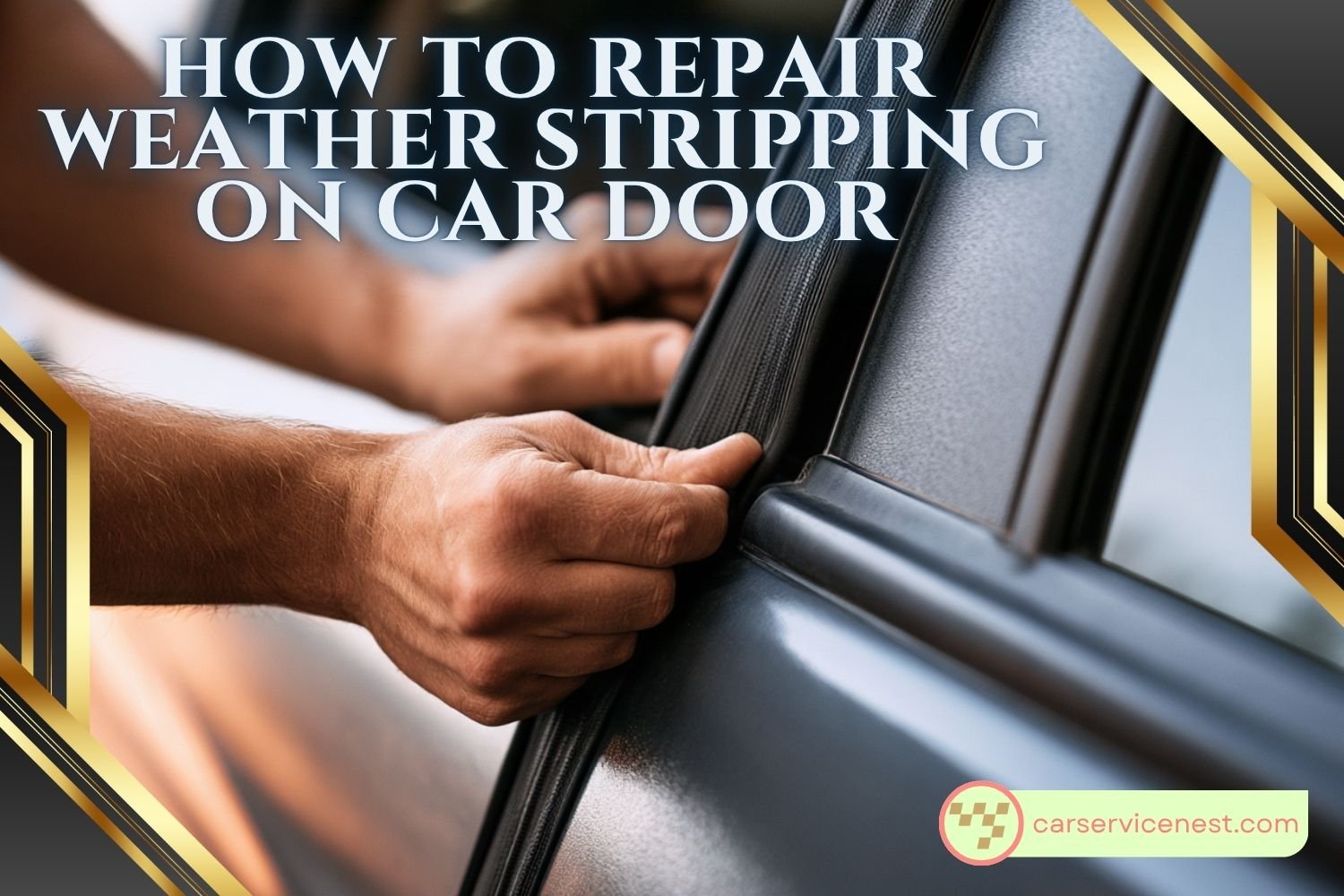
Loose or Sagging Sections: Stripping that has pulled away from the metal pinch weld due to failing factory glue, but the rubber itself remains supple and intact.
Cracks, Tears & Dry Rot: Brittle rubber showing splits, chunks missing, or severe flattening that fails to block air and water.
Complete Seal Degradation: Hardened, flattened seals spanning entire door frames requiring full replacement.
Financial Planning: How Much Does Car Maintenance Cost?
For U.S. vehicle owners managing household expenses, understanding how much a car maintenance cost is essential to prevent unexpected financial burdens. On average, routine maintenance and minor repairs cost U.S. vehicle owners between $400 and $800 annually (or up to $1,200 depending on vehicle age, mileage, and make). While modern engineering has extended service intervals, ignoring foundational items like oil changes, brake inspections, and tire rotations can transform minor preventative upkeep into multi-thousand-dollar emergency repairs. Understanding these typical costs allows drivers to plan ahead and protect their long-term automotive investment.
Vehicle upkeep expenses depend on how frequently you drive and the lifecycle stage of your car. Newer automobiles require mostly basic fluid changes, whereas aging cars demand heavy component replacements.
1. Routine Upkeep and Fluid Changes ($350 – $600 Annually): Routine maintenance covers scheduled items like synthetic oil changes, filter replacements, and tire rotations performed every 5,000 to 7,500 miles.
2. Wear-and-Tear Replacements ($300 – $550 Annually): Consumable parts wear down over time. Budgeting for brake pad replacements, wiper blade swaps, and periodic tire balancing covers these inevitable wear items.
3. Milestone and Minor Repairs ($250 – $500 Annually): As odometers climb past 60,000 miles, setting aside funds for spark plug replacements, coolant flushes, and minor electrical checks ensures financial stability.
Safety Assessment and Urgency Levels
Evaluate whether your vehicle’s weather stripping damage requires immediate intervention or routine monitoring:
Monitor: Minor rubber scuffs or tight seals that block air and water effectively.
Service Soon: Loose or sagging stripping sections that have pulled away from metal pinch welds.
Service Immediately / Tow Immediately: Damaged door seals letting in rainwater, triggering interior mold, electrical shorts, and annoying cabin wind noise.
Stop Immediately / Electrical Mold Hazard: Never ignore saturated interior carpet floorboards caused by failing door seals, as hidden moisture quickly breeds toxic mold and corrodes under-dash wiring harnesses.
Adhering to strict safety standards and sealing leaking door weather stripping immediately prevents interior mold destruction and electrical failures across every U.S. community.
Breakdown of Weather Stripping Repair Costs
Comparing DIY material expenses against professional body shop rates across the U.S. market:
| Repair Approach | Estimated U.S. Cost | Time Investment |
| DIY Adhesive Tube & Cleaner Kit | $15 – $25 total | 1 hour |
| DIY Full Door Seal Replacement | $40 – $90 per door | 1 to 2 hours |
| Professional Auto Body Shop Labor | $150 – $350 per door | 2 to 4 hours |
Service Duration Planning: How Long Does It Take for Car Maintenance?
For U.S. vehicle owners balancing busy daily commitments, knowing how long car maintenance takes is critical for planning transportation and work schedules. Whether you are dropping off your vehicle for a quick oil change or a comprehensive mileage milestone inspection, service turnaround times vary widely based on the specific mechanical task, shop workflow, and part availability. Standard minor services like an oil and filter change typically take 30 to 45 minutes, whereas comprehensive major services or complex mechanical repairs can require anywhere from 2 to 4 hours or even a full working day. Understanding these timeframes helps drivers manage expectations, coordinate rides, and ensure their vehicles receive proper professional attention.
Not all vehicle maintenance tasks are created equal. While some minor services are engineered for maximum speed in dedicated express lanes, comprehensive checkups require meticulous testing, teardown, and precision labor.
1. Routine Minor Services (30 to 60 Minutes): Proactive minor services, such as conventional or synthetic oil changes, windshield wiper blade replacements, cabin air filter swaps, and quick tire pressure checks, are designed for rapid turnaround.
2. Intermediate and Milestone Services (1 to 3 Hours): Services occurring at regular mileage increments (such as tire rotations, brake fluid flushes, wheel alignments, and spark plug replacements) involve multiple vehicle systems and require specialized equipment, extending the timeframe to between 1 and 3 hours.
3. Major Overhauls and Seal Replacements (1 to 4 Hours): Major services, including professional auto body seal replacements or comprehensive door weather stripping overhauls, demand meticulous old glue removal and alignment, requiring anywhere from 1 to 2 hours for DIY fixes up to 4 hours for shop labor.
Car Maintenance Duration Matrix
Reference this structured matrix to review service categories, average time requirements, and included maintenance tasks.
| Service Category | Average Duration | Primary Tasks Included |
| Oil Change & Filter Swap | 30 – 45 Minutes | Draining oil, replacing oil filter, refilling fluid, visual safety check. |
| Oil Change & Tire Rotation | 45 – 60 Minutes | Proactive tire rotation, tread depth checks, and pressure adjustments. |
| Brake Pad Replacement (Per Axle) | 1.5 – 2.5 Hours | Installing new brake pads, inspecting rotors, and bleeding lines. |
| DIY Seal Prep & Cleaning | 15 to 30 Minutes | Scrubbing old factory glue and road grime with 91% isopropyl alcohol. |
| DIY Adhesive Glued Repair | 45 to 60 Minutes | Applying black weatherstrip adhesive and clamping seals with tape. |
| Full Door Seal Replacement | 1 to 2 Hours | Stripping dry-rotted rubber and pressing new OEM seals onto pinch welds. |
Cost Comparison: Weather Stripping Service Tiers Matrix
Comparing average U.S. repair costs highlights pricing expectations across DIY adhesive kits, full seal replacements, and professional body shop labor.
| Weather Stripping Service Tier | Average Materials Cost | Average Total Shop / DIY Cost |
| DIY 3M Adhesive Tube | $10 – $18 | $15 – $25 (DIY Kit) |
| DIY OEM Replacement Seal | $40 – $90 | $40 – $90 per door |
| Silicone Lubricant Spray | $8 – $15 | $8 – $15 (DIY Maintenance) |
| Professional Body Shop Labor | $50 – $150 | $150 – $350 per door |
Master Service Schedule for General Maintenance on a Car
Following a time and mileage-based schedule ensures that no critical maintenance item is overlooked:
Minor Routine Service (Every 5,000 to 7,500 Miles / 6 Months): Synthetic engine oil and filter replacement; tire rotation and cold inflation pressure check; topping off washer fluid; visual check of brakes, belts, and lights.
Intermediate Maintenance (Every 15,000 to 30,000 Miles / 12 to 24 Months): Engine air filter and cabin HVAC filter renewals; hydraulic brake fluid moisture test and flush; battery conductance load test; wiper blade replacements.
Major Mileage Overhaul (Every 60,000 to 100,000 Miles / 5 to 8 Years): Automatic transmission fluid exchange; radiator coolant flush; iridium spark plug replacement; serpentine drive belt and tensioner renewal; differential gear oil replacement.
General Maintenance Inspection & Service Matrix
Review the master service matrix detailing component inspection tasks, frequencies, and action triggers.
| Service Category | Average Duration | Personal Maintenance Tasks Included |
| Door Seal & Weather Strip Check | 10 to 15 Minutes | Inspecting rubber door perimeters monthly for cracks, dry rot, or loose sections. |
| Silicone Seal Conditioning | 15 Minutes | Spraying silicone lubricant over rubber seals semi-annually to preserve flexibility. |
| Engine Oil & Filter | Full synthetic motor oil & OEM filter exchange | 5,000 – 7,500 Miles / 6 Mo |
Frequently Asked Questions
- Can torn car door weather stripping be glued back together?
Small tears can be mended with black weatherstrip adhesive, but severely split or flattened seals should be replaced entirely for an airtight seal. - How can I stop wind noise coming through my car doors?
Inspect door seals for gaps or flattened spots. Applying silicone lubricant or readjusting the door latch striker plate often restores a tight, quiet seal. - How long does weatherstrip adhesive take to dry?
While tacky in 5 minutes, 3M weatherstrip adhesive requires a full 24-hour curing period to achieve maximum bonding strength. - Does car insurance cover damaged door weather stripping?
No. Auto insurance policies classify worn seals, dry rot, and weather stripping wear-and-tear as normal vehicle maintenance, which is excluded from coverage. - How do I prevent rubber door seals from freezing in winter?
Wipe down door weather stripping with silicone spray or petroleum jelly before winter freeze events to prevent rubber from sticking to painted door frames. - Why should I avoid using standard household super glue?
Regular glue hardens into brittle shards, shatters under constant door vibration, and ruins rubber door seals. - Do auto parts stores sell universal weather stripping?
Yes, but vehicle-specific OEM replacement seals are always recommended because they match factory corner contours and clip placements perfectly. - What is the best way to remove old gummy weatherstrip glue?
Scrubbing with 91% isopropyl alcohol and a clean rag dissolves old adhesive residue effectively without harming painted door frames.
Final Takeaway
Mastering how to repair weather stripping on car door issues yourself is an affordable, straightforward DIY project that eliminates annoying wind noise and protects your interior cabin from water leaks. To get started on your door seal restoration today, you should immediately inspect your rubber perimeter seals for loose sections or dry rot, scrub old residue clean with 91% isopropyl alcohol, and evaluate whether a tube of 3M black weatherstrip adhesive or an OEM replacement seal fits your needs. While minor loose sections can safely wait for your next convenient weekend garage project, you must address torn seals or water leaks right away before moisture destroys your interior carpeting and electronics across U.S. roadways.